PMEGP vs Mudra Loan 2026: नया Business शुरू करने के लिए कौन बेहतर?
अगर आपके पास business idea है लेकिन शुरुआत के लिए ₹5 लाख, ₹10 लाख या उससे ज्यादा capital चाहिए, तो दो government-backed options जल्दी सामने आते हैं—PMEGP और MUDRA।
फिर सवाल आता है: कौन-सा loan लेना चाहिए?
PMEGP में subsidy का आकर्षण है। दूसरी तरफ MUDRA में micro-business credit की अलग-अलग categories हैं। और अब Tarun Plus के तहत eligible borrowers के लिए financing ₹20 लाख तक जा सकती है।
लेकिन यहां एक जरूरी बात है।
₹20 लाख Mudra Loan और ₹50 लाख PMEGP project cost को देखकर सीधे यह तय नहीं किया जा सकता कि कौन बेहतर है।
क्योंकि loan की सही choice आपके business के आकार, stage, project cost, own contribution, subsidy eligibility और सबसे बढ़कर repayment capacity पर निर्भर करती है।
अगर आप PMEGP को पहले से detail में समझना चाहते हैं, तो Kamai Mantra का PMEGP 2026 पर पूरा guide पढ़ सकते हैं।
PMEGP और Mudra में सबसे बड़ा अंतर क्या है?
दोनों schemes को सिर्फ “सरकारी business loan” कहना आसान है, लेकिन इनका उद्देश्य और structure अलग है।
PMEGP यानी Prime Minister’s Employment Generation Programme का मुख्य उद्देश्य नए micro-enterprises और self-employment ventures को स्थापित करने में मदद करना और employment opportunities पैदा करना है। Current official PMEGP portal के अनुसार यह rural और urban दोनों क्षेत्रों में नए enterprises पर केंद्रित है।
MUDRA यानी Pradhan Mantri MUDRA Yojana का उद्देश्य micro enterprises को institutional, collateral-free credit उपलब्ध कराना है। Official Department of Financial Services information के अनुसार इसमें term loan और working-capital requirements दोनों को finance किया जा सकता है।
यानी सरल भाषा में:
PMEGP: नया eligible enterprise + subsidy-linked financing structure
MUDRA: micro-business के लिए credit facility
यही पहला अंतर है जिसे समझना जरूरी है।
2026 में Mudra Loan की categories क्या हैं?
Department of Financial Services की current information के अनुसार PMMY में चार categories हैं:
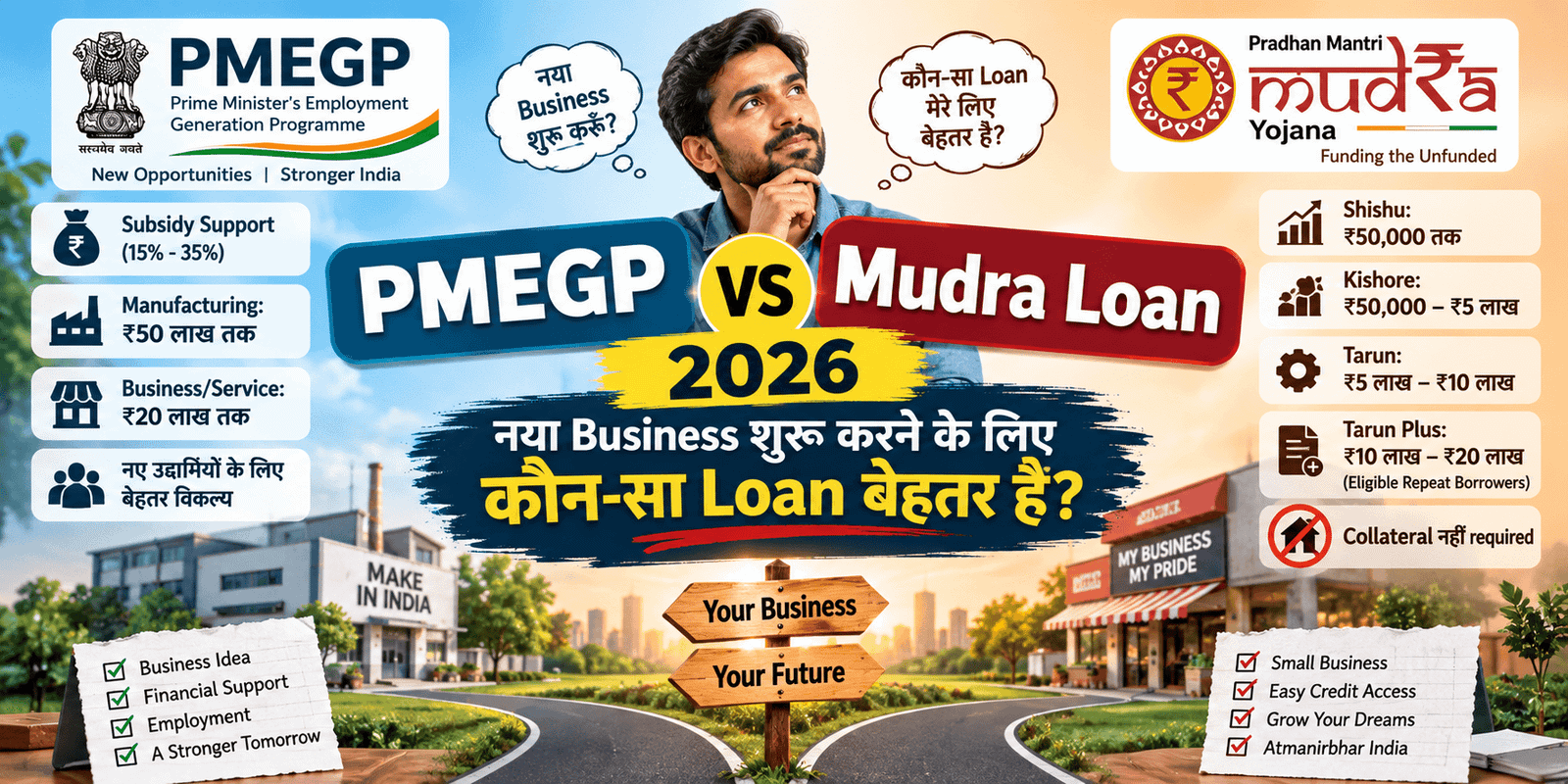
- Shishu: ₹50,000 तक
- Kishore: ₹50,000 से अधिक और ₹5 लाख तक
- Tarun: ₹5 लाख से अधिक और ₹10 लाख तक
- Tarun Plus: ₹10 लाख से अधिक और ₹20 लाख तक
लेकिन Tarun Plus को लेकर सबसे ज्यादा confusion है।
Tarun Plus हर नए applicant के लिए ₹20 लाख का automatic loan नहीं है।
Official information के अनुसार Tarun Plus उन entrepreneurs के लिए है जिन्होंने पहले Tarun category का loan लिया और successfully repay किया हो। यह provision 24 October 2024 से प्रभावी है।
इसलिए अगर कोई advertisement कहता है:
“नया business शुरू करें और सीधे ₹20 लाख Mudra Loan पाएं।”
तो बिना eligibility check किए इस claim पर भरोसा नहीं करना चाहिए।
Current categories और conditions देखने के लिए Department of Financial Services का official PMMY page सबसे भरोसेमंद starting point है।
क्या Mudra Loan में collateral नहीं लगता?
Official PMMY information के अनुसार collateral required नहीं है।
लेकिन इसका अर्थ यह नहीं है कि हर applicant को बिना किसी assessment के loan मिल जाएगा।
Collateral-free का मतलब है कि loan के लिए सामान्य collateral requirement नहीं है। फिर भी lender business details, repayment capacity, documents और अपने applicable credit norms के आधार पर application evaluate कर सकता है।
इसलिए:
Collateral-free ≠ Guaranteed approval
यह distinction याद रखना बहुत जरूरी है।
PMEGP में कितना project बनाया जा सकता है?
PMEGP में financing structure अलग है।
Current official PMEGP information के अनुसार margin-money subsidy के लिए maximum admissible project cost:
Manufacturing: ₹50 लाख
Business/Service: ₹20 लाख
है।
लेकिन इसका अर्थ यह नहीं है कि सरकार ₹50 लाख cash देगी।
PMEGP में project financing में beneficiary contribution, bank finance और applicable margin-money subsidy जैसे components होते हैं।
इसलिए headline:
“PMEGP में ₹50 लाख मिलेंगे”
और वास्तविकता:
“Manufacturing project के लिए maximum admissible project cost ₹50 लाख है”
दो अलग बातें हैं।
PMEGP में subsidy कितनी हो सकती है?
Current PMEGP scheme structure में margin-money subsidy beneficiary category और project location के अनुसार अलग होती है।
Broadly:
General Category
- Urban: 15%
- Rural: 25%
Prescribed Special Categories
- Urban: 25%
- Rural: 35%
MSME Ministry की current scheme booklet भी 15% से 35% तक margin-money subsidy structure और ₹50 लाख manufacturing तथा ₹20 लाख service project limits बताती है।
लेकिन यहां एक calculation trap है।
अगर आपका eligible project ₹10 लाख का है और applicable subsidy rate 25% है:
₹10,00,000 × 25% = ₹2,50,000
यह ₹2.50 लाख का illustrative margin-money amount है।
इसे यह मत समझिए कि सरकार आपके savings account में ₹2.50 लाख unrestricted cash डाल देगी।
PMEGP में subsidy का अपना scheme mechanism और adjustment process है। इसलिए actual financing structure को bank sanction और scheme conditions के साथ समझना चाहिए।
PMEGP में अपना पैसा कितना लगाना पड़ सकता है?
Current scheme structure के अनुसार beneficiary contribution broadly:
General Category: 10%
Prescribed Special Categories: 5%
हो सकता है।
मान लीजिए eligible project cost ₹10 लाख है।
General category में illustrative own contribution:
₹10,00,000 × 10% = ₹1,00,000
हो सकता है।
लेकिन इसका मतलब यह नहीं कि बाकी ₹9 लाख simply cash loan के रूप में हाथ में आ जाएंगे। Bank finance, subsidy adjustment और project structure को together देखना पड़ता है।
यही वजह है कि PMEGP application से पहले एक proper project report बनाना बहुत जरूरी है।
PMEGP के लिए कौन eligible हो सकता है?
Current official PMEGP portal के अनुसार:
- individual applicant की उम्र 18 वर्ष से अधिक होनी चाहिए;
- new projects के लिए income ceiling नहीं है;
- ₹10 लाख से ऊपर manufacturing project के लिए कम-से-कम VIII standard pass qualification चाहिए;
- ₹5 लाख से ऊपर business/service project के लिए भी कम-से-कम VIII standard pass qualification लागू है;
- assistance मुख्यतः new projects के लिए है।
इसके अलावा project में capital expenditure होना चाहिए और कुछ activities negative list या specific restrictions के अधीन हो सकती हैं।
इसलिए “कोई भी business” PMEGP के तहत automatically eligible नहीं है।
Existing business के लिए क्या PMEGP मिल सकता है?
यहां थोड़ी सावधानी जरूरी है।
PMEGP का primary focus new enterprises पर है। Current official portal बताता है कि existing units, खासकर वे जिन्होंने पहले अन्य government schemes के तहत benefit/subsidy ली है, new-unit assistance के लिए eligible नहीं होते।
हालांकि existing PMEGP/MUDRA units के लिए कुछ upgradation provisions भी हैं। Official portal के अनुसार eligible existing PMEGP/MUDRA units के लिए first loan repayment, profitability और Udyam registration जैसी conditions लागू होती हैं।
इसलिए existing business वाले applicant को fresh-unit PMEGP और upgradation route को अलग-अलग समझना चाहिए।
₹10 लाख के business में PMEGP और Mudra को समझें
अब एक practical example लेते हैं।
मान लीजिए आपको एक small manufacturing/service business शुरू करने के लिए ₹10 लाख चाहिए।
Project में:
- Machinery: ₹4 लाख
- Setup: ₹1.5 लाख
- Equipment/software: ₹1 लाख
- Initial working capital: ₹2 लाख
- Other eligible costs: ₹1.5 लाख
Total project cost = ₹10 लाख
अगर PMEGP consider कर रहे हैं
मान लें आप applicable category/location के अनुसार subsidy के लिए eligible हैं।
यदि illustrative applicable subsidy rate 15% है:
₹10 लाख × 15% = ₹1.50 लाख
और general category beneficiary contribution 10% मानें:
₹10 लाख × 10% = ₹1 लाख
लेकिन इसे सीधे:
₹10 लाख − ₹1 लाख − ₹1.50 लाख = ₹7.50 लाख loan
मान लेना सही नहीं होगा।
Actual financing bank appraisal, own contribution, subsidy adjustment और applicable scheme conditions के अनुसार तय होगी।
अगर Mudra consider कर रहे हैं
₹10 लाख का eligible loan requirement Tarun category के upper limit तक आता है।
अगर requirement ₹10 लाख से ऊपर है, तो Tarun Plus का सवाल आता है। लेकिन Tarun Plus के लिए previous Tarun loan successfully repay करने की condition लागू है।
यानी first-time borrower और experienced/repeat borrower की situation अलग हो सकती है।
नया business शुरू करने वाले के लिए PMEGP बेहतर हो सकता है?
कुछ situations में हाँ।
अगर:
- business नया है;
- project cost meaningful है;
- machinery/setup की जरूरत है;
- आपका activity PMEGP के तहत eligible है;
- subsidy के लिए आप eligible हैं;
- आपके पास own contribution है;
- और detailed project report तैयार कर सकते हैं,
तो PMEGP को seriously evaluate करना चाहिए।
खासकर manufacturing project में ₹50 लाख और business/service project में ₹20 लाख तक की admissible project-cost ceiling इसे बड़े eligible micro-enterprise projects के लिए relevant बनाती है।
लेकिन इसका मतलब यह नहीं कि PMEGP हर नए entrepreneur के लिए automatically best है।
अगर आपको सिर्फ ₹2 लाख या ₹3 लाख working capital चाहिए, तो पूरा PMEGP project structure आपके लिए जरूरत से ज्यादा complicated हो सकता है।
ऐसे case में eligible MUDRA credit अधिक straightforward option हो सकता है।
Existing business के लिए Mudra ज्यादा practical हो सकता है?
कई मामलों में ऐसा हो सकता है।
मान लीजिए आपका business पहले से चल रहा है और आपके पास:
- existing customers हैं;
- sales history है;
- bank transactions हैं;
- repayment record है;
- और अब expansion के लिए capital चाहिए।
तब MUDRA को evaluate करना logical हो सकता है।
और अगर आप पहले Tarun category loan successfully repay कर चुके हैं, तो eligible होने पर Tarun Plus ₹10 लाख से ऊपर और ₹20 लाख तक financing की category उपलब्ध कराता है।
इस situation में आपको केवल subsidy नहीं, बल्कि:
interest cost + tenure + EMI + working capital requirement
को compare करना चाहिए।
PMEGP vs Mudra: आसान comparison
| Factor | PMEGP | MUDRA |
|---|---|---|
| मुख्य उद्देश्य | New micro-enterprise / self-employment | Micro-enterprise credit |
| Subsidy | Applicable margin-money subsidy | PMEGP जैसा subsidy structure नहीं |
| Manufacturing project ceiling | ₹50 लाख | PMMY category-based |
| Business/Service PMEGP ceiling | ₹20 लाख | PMMY category-based |
| Shishu | लागू नहीं | ₹50,000 तक |
| Kishore | लागू नहीं | ₹50,000–₹5 लाख |
| Tarun | लागू नहीं | ₹5–₹10 लाख |
| Tarun Plus | लागू नहीं | ₹10–₹20 लाख, eligible repeat Tarun borrowers |
| Collateral | Applicable bank/scheme conditions देखें | Official PMMY information: collateral not required |
| New business | Strong focus | Eligible micro-business needs |
| Existing business | Specific rules/upgradation provisions | Credit requirement के अनुसार evaluate |
PMEGP की project limits और eligibility official PMEGP portal से तथा MUDRA categories और collateral information Department of Financial Services से cross-check की गई हैं।
Loan लेने से पहले EMI की यह calculation जरूर करें
मान लीजिए आपके business की expected monthly sales:
₹2,00,000
और monthly operating expenses:
₹1,55,000
तो operating surplus:
₹45,000
अब hypothetical EMI:
₹25,000
तो EMI के बाद:
₹20,000
बचता है।
पहली नजर में सब ठीक लग रहा है।
लेकिन अब stress test करें।
अगर sales 20% गिरकर:
₹1,60,000
रह जाए और expenses केवल ₹10,000 कम होकर ₹1,45,000 हों, तो surplus:
₹15,000
रह जाएगा।
और अगर EMI ₹25,000 है, तो:
₹10,000 का monthly gap
बन सकता है।
यही calculation आपको बताती है कि loan वास्तव में affordable है या सिर्फ paper पर affordable दिख रहा है।
इसलिए loan लेने से पहले तीन scenarios बनाएं:
Best Case: Sales मजबूत
Base Case: Realistic sales
Stress Case: Sales 20–30% कम
अगर stress case में business लगातार EMI नहीं संभाल सकता, तो project size कम करना, ज्यादा own capital लगाना या financing structure बदलना बेहतर हो सकता है।
PMEGP में कौन-सी project cost सावधानी से बनानी चाहिए?
Official PMEGP portal के अनुसार land cost project cost में शामिल नहीं की जा सकती। Ready-built shed तथा long lease/rental work-shed की cost कुछ conditions के अधीन शामिल हो सकती है, जिसमें maximum three years तक की restriction बताई गई है।
इसलिए project report में केवल subsidy बढ़ाने के लिए artificial costs जोड़ना सही नहीं है।
Machinery के लिए genuine quotations रखें।
Working capital की जरूरत realistic रखें।
और यह देखें कि project वास्तव में जितने capital से चल सकता है, उतना ही project cost बनाया जाए।
PMEGP में कौन-से business activities eligible हैं?
PMEGP का coverage काफी broad है, लेकिन हर activity automatically eligible नहीं है।
Current official guidelines के अनुसार viable new micro-enterprises eligible हो सकते हैं, लेकिन negative list और activity-specific restrictions लागू होती हैं। Trading activities के लिए भी अलग conditions हैं।
उदाहरण के लिए eligible project structure में कुछ manufacturing और service activities आ सकती हैं:
- food processing
- furniture/manufacturing
- fabrication
- tailoring/garment production
- repair services
- workshops
- printing-related services
- eligible local service businesses
लेकिन किसी specific business idea को eligible मानने से पहले उसकी exact activity official PMEGP guidelines में check करनी चाहिए।
अगर आप food-related business के बारे में सोच रहे हैं, तो Kamai Mantra का 2026 में घर से Food Business शुरू करने का practical guide भी उपयोगी हो सकता है।
Application करने से पहले क्या तैयार रखें?
Loan application का सबसे कमजोर हिस्सा अक्सर idea नहीं बल्कि project preparation होता है।
कम-से-कम ये चीजें पहले तैयार रखें:
- Business idea
- Product/service details
- Target customer
- Local market research
- Competitor analysis
- Machinery quotations
- Project cost
- Own contribution
- Working capital requirement
- Monthly sales estimate
- Monthly operating expenses
- Expected operating surplus
- Repayment capacity
- Required documents
एक अच्छी project report का उद्देश्य केवल subsidy दिखाना नहीं होना चाहिए।
उसका उद्देश्य यह दिखाना होना चाहिए:
“यह business कैसे चलेगा और loan कैसे repay होगा?”
PMEGP application कहां से करें?
PMEGP के लिए random agents या WhatsApp contacts से शुरुआत करने के बजाय official portal का इस्तेमाल करें।
Official PMEGP Portal पर current scheme information और application-related facilities उपलब्ध हैं।
Ministry of MSME का MyMSME portal भी PMEGP information और application facility से जुड़ा है।
अगर कोई व्यक्ति कहता है:
“₹5,000 दो, PMEGP approval guarantee है।”
या:
“₹20 लाख Mudra loan guaranteed मिलेगा।”
तो सावधान रहें।
Government-backed scheme का अर्थ guaranteed sanction नहीं होता।
PMEGP vs Mudra चुनते समय 7 बड़ी गलतियां
1. ₹50 लाख को cash grant समझना
PMEGP की ₹50 लाख figure manufacturing project की maximum admissible project cost है।
2. हर नए व्यक्ति के लिए ₹20 लाख Mudra मान लेना
Tarun Plus के लिए previous Tarun loan successfully repay करने की condition है।
3. Subsidy देखकर business चुनना
पहले business demand और profitability देखें।
4. EMI को sales से compare करना
EMI को available operating cash flow से compare करें।
5. Working capital भूल जाना
Machine खरीदने के बाद raw material और daily operations के लिए cash नहीं बचा तो business मुश्किल में आ सकता है।
6. Artificial project cost बनाना
Genuine quotations और realistic costs रखें।
7. Loan approval को income समझना
Loan पैसा है, लेकिन वह repayment obligation के साथ आता है।
PMEGP या Mudra—किसके लिए क्या ज्यादा suitable हो सकता है?
अगर आप पहली बार business शुरू कर रहे हैं
PMEGP को पहले evaluate करें, खासकर यदि project eligible है और subsidy structure आपके लिए meaningful benefit दे सकता है।
अगर आपको छोटा business loan चाहिए
MUDRA की Shishu, Kishore या Tarun categories आपकी requirement के अनुसार relevant हो सकती हैं।
अगर आप पहले Tarun loan चुका चुके हैं
और eligible हैं, तो Tarun Plus को evaluate किया जा सकता है।
अगर आपका business पहले से चल रहा है
MUDRA या other MSME credit options को compare करना practical हो सकता है। PMEGP में existing-unit/upgradation rules अलग से देखने होंगे।
अगर आपका project manufacturing का है
PMEGP की ₹50 लाख admissible project-cost ceiling इसे potentially relevant option बनाती है।
Key Takeaways
अगर पूरी comparison को बहुत simple तरीके से समझें:
PMEGP चुनने की तरफ झुकें जब:
- आप eligible नया micro-enterprise शुरू कर रहे हैं;
- project cost meaningful है;
- subsidy के लिए eligible हैं;
- machinery/setup की जरूरत है;
- और detailed project report तैयार कर सकते हैं।
Mudra को evaluate करें जब:
- आपको micro-business credit चाहिए;
- project relatively छोटा है;
- working capital की जरूरत है;
- existing business को finance करना है;
- या आप eligible Tarun/Tarun Plus category में आते हैं।
सबसे जरूरी बात:
“कहां ज्यादा loan मिलेगा?” से पहले पूछिए—“कौन-सा financing structure मेरे business के cash flow के लिए ज्यादा सुरक्षित है?”
क्योंकि ₹10 लाख का ऐसा loan जो आराम से repay हो जाए, उस ₹20 लाख loan से बेहतर हो सकता है जिसकी EMI business पर लगातार pressure डाले।
FAQs
PMEGP और Mudra Loan में मुख्य अंतर क्या है?
PMEGP नए micro-enterprises और self-employment ventures पर केंद्रित है तथा eligible projects में margin-money subsidy का component हो सकता है। MUDRA micro enterprises को institutional credit उपलब्ध कराने पर केंद्रित है।
क्या Mudra Loan ₹20 लाख तक मिलता है?
हाँ, Tarun Plus category में ₹10 लाख से अधिक और ₹20 लाख तक loan उपलब्ध हो सकता है, लेकिन previous Tarun-category loan successfully repay करने की condition लागू है।
क्या नया applicant सीधे ₹20 लाख Mudra Loan ले सकता है?
Tarun Plus की current eligibility को देखते हुए केवल first-time borrower होने के आधार पर ₹20 लाख का Tarun Plus loan उपलब्ध नहीं माना जाना चाहिए। Previous Tarun loan successfully repay करने की condition महत्वपूर्ण है।
PMEGP में maximum project cost कितनी है?
Current official PMEGP portal के अनुसार manufacturing sector में ₹50 लाख और business/service sector में ₹20 लाख तक maximum admissible project cost है।
PMEGP में subsidy कितनी होती है?
Applicable margin-money subsidy beneficiary category और rural/urban location के अनुसार बदलती है। Current scheme structure में rates 15% से 35% तक हो सकते हैं।
क्या PMEGP subsidy cash में मिलती है?
इसे unrestricted cash grant की तरह नहीं समझना चाहिए। Margin-money subsidy scheme के financing और adjustment mechanism से जुड़ी होती है तथा applicable conditions पूरी करनी होती हैं।
क्या Mudra Loan में collateral लगता है?
Department of Financial Services की current PMMY information के अनुसार collateral required नहीं है। हालांकि lender की credit assessment और अन्य applicable conditions फिर भी लागू होती हैं।
क्या PMEGP existing business के लिए उपलब्ध है?
PMEGP का primary focus new enterprises पर है। Existing PMEGP/MUDRA units के लिए specific upgradation provisions हो सकते हैं और उनकी अलग conditions लागू होती हैं।
क्या PMEGP में income limit है?
Current official PMEGP portal के अनुसार new projects के लिए income ceiling नहीं है। अन्य eligibility conditions लागू होती हैं।
PMEGP के लिए minimum age कितनी है?
Individual applicant के लिए current official PMEGP information में age 18 years से अधिक बताई गई है।
Conclusion
PMEGP और Mudra दोनों useful government-backed financing options हो सकते हैं, लेकिन दोनों को एक ही तरह का loan समझना सही नहीं है।
PMEGP खासकर eligible new micro-enterprises के लिए attractive हो सकता है क्योंकि applicable margin-money subsidy financing structure का हिस्सा बन सकती है।
MUDRA micro-business credit के लिए अलग categories देता है और eligible repeat Tarun borrowers के लिए Tarun Plus के तहत ₹20 लाख तक financing category उपलब्ध है।
लेकिन final decision केवल loan amount या subsidy percentage देखकर न लें।
पहले calculate करें:
Business Revenue → Operating Expenses → Available Cash Flow → EMI → Safety Buffer
अगर numbers मजबूत हैं, तभी financing option चुनें।
और अगर business model कमजोर है, तो subsidy वाला loan भी खराब financial decision बन सकता है।
इसलिए 2026 में PMEGP और Mudra के बीच सही सवाल यह नहीं है:
“कौन ज्यादा पैसा देता है?”
सही सवाल है:
“मेरे business के लिए कौन-सा financing option कम financial pressure के साथ sustainable growth दे सकता है?”
यही calculation आपको केवल loan लेने वाले व्यक्ति से एक बेहतर business owner बनने की तरफ ले जाती है।
आगे Kamai Mantra पर क्या पढ़ें
- PMEGP 2026: ₹50 लाख तक के बिज़नेस पर सरकारी मदद कैसे मिलेगी? — PMEGP की detailed eligibility, subsidy और application जानकारी।
- घर से Food Business 2026: FSSAI के नियम और शुरुआत का पूरा तरीका — food-based business शुरू करने वालों के लिए।
- ₹15 लाख तक का मौका! MSME Idea Hackathon 6.0 — innovation और business idea support के लिए।
Educational/Financial Disclaimer: यह article सामान्य educational information के लिए है। Loan approval, interest rate, subsidy, eligibility, income या financial outcome की कोई guarantee नहीं है। Actual application से पहले संबंधित official portal और lending institution से current eligibility, interest rate, charges, documentation और repayment conditions verify करें।
Future Review Flags: PMEGP project-cost limits, subsidy rates, PMMY categories, Tarun Plus eligibility, lender interest rates, application procedures और scheme guidelines भविष्य में बदल सकते हैं। किसी महत्वपूर्ण policy या official notification के बाद इस article को update किया जाना चाहिए।