
घर से Food Business 2026: FSSAI के नए नियम और शुरुआत का पूरा तरीका
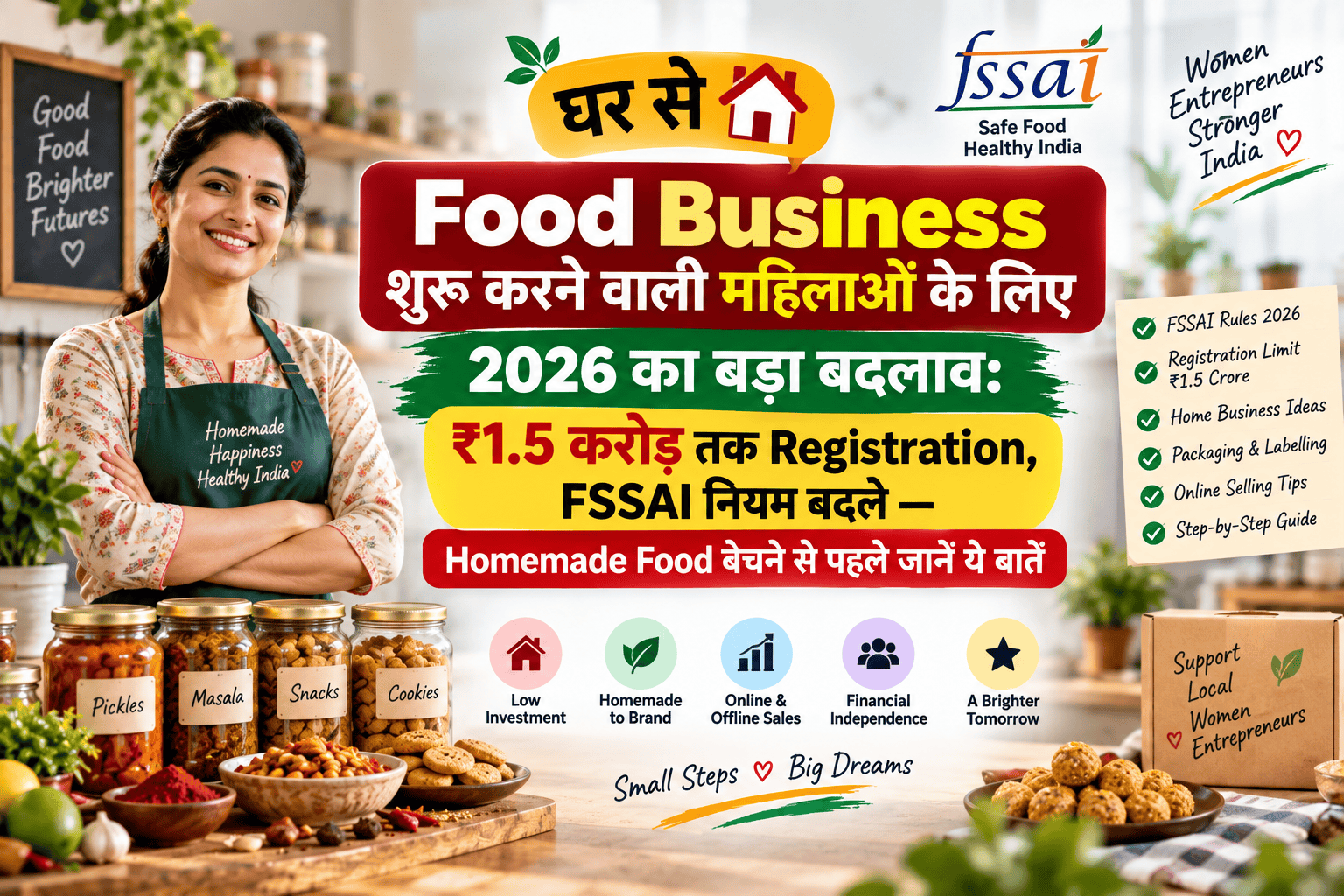
सुबह घर का काम खत्म करने के बाद अगर आप अचार, मसाले, नमकीन, cookies, cakes, papad, sweets, regional snacks या कोई homemade food product बनाती हैं, तो आपने शायद कभी न कभी सोचा होगा—“इसे घर से बेचकर एक छोटा business क्यों न बनाया जाए?”
आज WhatsApp, Instagram, local delivery, exhibitions और online marketplaces ने यह काम पहले की तुलना में आसान जरूर किया है। लेकिन जैसे ही घर का kitchen एक commercial food business में बदलता है, सिर्फ अच्छा खाना बनाना काफी नहीं रहता।
Food safety, registration, packaging, labelling, pricing, tax और customer complaints जैसी चीजें भी business का हिस्सा बन जाती हैं।
और 2026 में food businesses के लिए एक महत्वपूर्ण regulatory change हुआ है।
1 April 2026 से FSSAI ने food businesses के turnover thresholds revise किए हैं। अब registration category का turnover limit ₹1.5 crore तक है; ₹1.5 crore से ऊपर और ₹50 crore तक State Licence तथा ₹50 crore से ऊपर Central Licence का framework लागू है।
इसके साथ FSSAI registrations और licences के लिए perpetual validity का reform भी आया है—यानी सामान्य renewal cycle की जगह registration/licence तब तक valid रहेगा जब तक वह suspended, cancelled या surrendered न हो, हालांकि food-safety और अन्य statutory compliance जारी रहती है।
लेकिन इसका मतलब यह नहीं है कि घर से food बेचने वाली हर महिला को बिना किसी formalities के ₹1.5 crore तक business करने की खुली छूट मिल गई।
यही फर्क इस article में समझना जरूरी है।
2026 में Home Food Business के लिए क्या बदला?
सबसे पहले current rule को simple table में समझिए:
| FSSAI category | 1 April 2026 से turnover |
|---|---|
| Registration | ₹1.5 करोड़ तक |
| State Licence | ₹1.5 करोड़ से ऊपर और ₹50 करोड़ तक |
| Central Licence | ₹50 करोड़ से ऊपर |
| Licence/Registration validity | Perpetual, subject to applicable conditions |
FSSAI के 13 March 2026 के official order में revised thresholds को 1 April 2026 से लागू किया गया है।
इस बदलाव का practical फायदा छोटे food businesses के लिए यह है कि पहले जिस turnover level पर licence category बदल सकती थी, अब registration category की ceiling काफी बढ़ गई है।
लेकिन registration category का मतलब “compliance खत्म” नहीं है।
Food business operator को hygiene, food safety, applicable labelling, record keeping और दूसरे relevant statutory requirements का पालन करना होता है। FSSAI के FAQ में भी perpetual validity के साथ continuing statutory compliance की जरूरत स्पष्ट की गई है।
घर से कौन-कौन से Food Business शुरू किए जा सकते हैं?
घर से business शुरू करने का सबसे अच्छा तरीका यह नहीं है कि एक साथ 20 products बेचने लगें।
शुरुआत में एक product family चुनना ज्यादा practical हो सकता है।
उदाहरण:
1. Homemade Pickles
- आम का अचार
- नींबू
- मिर्च
- mixed pickle
- regional recipes
2. मसाले
- गरम मसाला
- चाय मसाला
- सब्जी मसाला
- regional spice blends
3. Dry Snacks
- नमकीन
- mathri
- roasted snacks
- regional savouries
4. Bakery
- cookies
- tea cakes
- brownies
- dry cakes
5. Traditional Products
- papad
- बड़ी
- roasted flour mixes
- traditional sweets
6. Festival Products
- Diwali sweets
- festive snacks
- gifting boxes
- regional food hampers
7. Healthy/Convenience Products
- roasted snack mixes
- ready-to-cook mixes
- breakfast mixes
लेकिन यहां एक बात याद रखें:
“घर पर बनता है” का अर्थ “FSSAI rules से बाहर है” नहीं है।
FSSAI के अनुसार food business operators के लिए licensing/registration framework लागू होता है।
सबसे पहले Business Idea नहीं, Customer चुनें
मान लीजिए आप घर पर ₹200 की एक pickle bottle बनाती हैं।
आप सोच सकती हैं:
“Taste अच्छा है, लोग खरीद लेंगे।”
लेकिन business के लिए अगला सवाल होना चाहिए:
कौन खरीदेगा?
उदाहरण के लिए:
Customer Group A — Working Couples
उन्हें convenience चाहिए।
Customer Group B — दूसरे शहरों में रहने वाले लोग
उन्हें hometown-style regional food की तलाश हो सकती है।
Customer Group C — Students/Hostel Residents
Small packs और affordable pricing useful हो सकती है।
Customer Group D — Gift Buyers
Premium packaging और combo boxes ज्यादा relevant हो सकते हैं।
एक ही product को अलग customer groups के लिए अलग तरीके से position किया जा सकता है।
घर से Food Business शुरू करने का simple ₹10,000 example
मान लीजिए आप एक small homemade pickle business test करना चाहती हैं।
एक illustrative starting budget:
| खर्च | अनुमान |
|---|---|
| Raw material | ₹3,000 |
| Jars/containers | ₹2,000 |
| Labels/packaging | ₹1,500 |
| Basic hygiene items | ₹1,000 |
| Product photography/printing | ₹500 |
| Delivery/testing/misc. | ₹1,000 |
| Working buffer | ₹1,000 |
| कुल | ₹10,000 |
यह सिर्फ planning example है।
आपके product, city, packaging और quantity के अनुसार actual cost अलग होगी।
अब मान लीजिए:
100 jars × ₹200 = ₹20,000 sales
लेकिन sales ₹20,000 का मतलब ₹20,000 profit नहीं है।
अगर:
- ingredients = ₹8,000
- packaging = ₹3,000
- delivery/other = ₹2,000
- wastage/payment/marketing = ₹1,000
तो illustrative contribution:
₹20,000 − ₹14,000 = ₹6,000
होगा।
यानी price तय करते समय सिर्फ competitor की price copy करना खतरनाक है।
Product की सही pricing कैसे करें?
एक simple formula इस्तेमाल करें:
Total Product Cost + Packaging + Payment/Platform Cost + Delivery Support + Wastage + Marketing + Desired Margin = Selling Price
उदाहरण:
मान लीजिए एक jar बनाने की total direct cost:
₹90
है।
Packaging:
₹20
और average other variable cost:
₹15
तो आपका effective variable cost:
₹125
हुआ।
अगर आप ₹150 में बेचती हैं तो gross contribution सिर्फ:
₹25
है।
अगर customer acquisition के लिए आपने ₹20 खर्च कर दिए, तो margin बहुत कम रह जाएगा।
इसलिए homemade business में “सस्ता बेचकर ज्यादा orders” हमेशा सही strategy नहीं है।
2026 में FSSAI Registration का नया ₹1.5 करोड़ rule क्या मतलब रखता है?
यह सबसे महत्वपूर्ण section है।
पहले छोटे food businesses के लिए registration threshold काफी कम था।
लेकिन FSSAI के March 2026 order के बाद:
Registration: turnover up to ₹1.5 crore
हो गया है।
State Licence: ₹1.5 crore से ऊपर और ₹50 crore तक
और
Central Licence: ₹50 crore से ऊपर
है।
यह बदलाव 1 April 2026 से effective है।
इसलिए अगर कोई पुराना article अभी भी केवल ₹12 lakh registration threshold बता रहा है, तो उसे blindly follow न करें।
FSSAI ने revised threshold को official order और FAQs में स्पष्ट किया है।
क्या इसका मतलब ₹1.5 करोड़ तक FSSAI Licence की जरूरत नहीं?
इसे थोड़ा सही तरीके से समझिए।
₹1.5 crore तक turnover होने पर applicable category registration हो सकती है।
लेकिन food business को FSSAI framework के तहत register/license करना और applicable requirements follow करना फिर भी जरूरी हो सकता है।
FSSAI का official FoSCoS portal food businesses के लिए:
- eligibility
- new registration/licence
- modification
- application tracking
- compliance
जैसी services provide करता है।
Official portal:
FSSAI FoSCoS
FSSAI Registration के लिए कौन-सा portal इस्तेमाल करें?
किसी agent की random website पर registration करने की जरूरत नहीं है।
FSSAI का official food compliance platform:
है।
FSSAI ने अपनी website पर भी fraud messages और fake payment requests के बारे में warning दी है और food licence/registration से संबंधित payments केवल official FoSCoS portal से करने की सलाह दी है।
यह point खासकर home-based entrepreneurs के लिए important है क्योंकि शुरुआती stage पर वे अक्सर third-party agents पर निर्भर हो जाते हैं।
क्या FSSAI Registration की validity अब lifetime है?
इसे “lifetime” कहने के बजाय perpetual validity समझना ज्यादा सही है।
2026 reforms के अनुसार licence/registration सामान्यतः तब तक valid रहेगा जब तक:
- suspended
- cancelled
- surrendered
न हो।
लेकिन perpetual validity का अर्थ यह नहीं कि food business को हमेशा के लिए compliance से छूट मिल गई।
Hygiene, food safety और अन्य applicable statutory requirements जारी रहती हैं।
क्या घर से Food Business के लिए अलग kitchen चाहिए?
यह सवाल बहुत common है।
सिर्फ article पढ़कर यह conclude नहीं किया जा सकता कि हर home-based food business के लिए एक ही type का separate commercial kitchen अनिवार्य है।
Requirements business activity, premises, food category, local rules और applicable FSSAI conditions के अनुसार बदल सकती हैं।
इसलिए अगर आप:
- home kitchen
- rented kitchen
- shared commercial kitchen
- cloud kitchen
में से कोई model चुन रही हैं, तो अपने exact Kind of Business (KoB) की eligibility FoSCoS पर check करें।
FoSCoS का eligibility tool अलग-अलग food business categories के लिए applicable licensing/registration framework देखने की सुविधा देता है।
Food Packaging पर ध्यान क्यों जरूरी है?
यह वह जगह है जहां कई small sellers professional-looking product तो बना लेते हैं, लेकिन compliance side कमजोर रह जाती है।
अगर आप packaged food बेचती हैं, तो applicable food-labelling requirements को समझना जरूरी है।
Product label पर कौन-कौन-सी details लागू होंगी, यह product और packaging category के अनुसार बदल सकता है।
इसलिए किसी दूसरे brand का label देखकर copy न करें।
आपको applicable requirements के लिए FSSAI regulations और official guidance देखनी चाहिए।
विशेष रूप से:
- product name
- ingredients
- net quantity
- batch/lot information
- date-related declarations
- manufacturer/packer details
- FSSAI number/logo, where applicable
- allergen information, where applicable
- storage instructions, where applicable
जैसी information relevant हो सकती है।
Exact label requirements product-specific हो सकती हैं।
Instagram से Food बेचने पर क्या FSSAI rules खत्म हो जाते हैं?
नहीं।
यह बहुत important distinction है।
अगर customer आपको Instagram DM से order करता है, तो transaction digital हो गया।
लेकिन आपका product food ही है।
इसलिए social-media selling से food-safety obligations automatically खत्म नहीं होते।
इसी तरह:
- WhatsApp orders
- own website
- marketplace
- local delivery
- exhibitions
इनमें से कोई channel अपने आप FSSAI compliance को replace नहीं करता।
क्या WhatsApp से शुरू करना बेहतर है?
Beginner के लिए यह एक practical testing channel हो सकता है।
मान लीजिए आप 3 products बेचती हैं:
- Mango Pickle
- Lemon Pickle
- Mixed Spice
आप पहले:
- 20 friends/family customers
- local apartment groups
- nearby offices
- school-parent communities
- local community groups
के माध्यम से feedback ले सकती हैं।
लेकिन spam messaging न करें।
Better approach:
Sample → Feedback → सुधार → repeat order → referral
Instagram पर Home Food Business कैसे शुरू करें?
आपको शुरुआत में expensive website की जरूरत जरूरी नहीं है।
एक simple Instagram business profile में:
Bio
- क्या बेचती हैं?
- किस city में?
- delivery area?
- order कैसे करें?
Highlights
- Menu
- Prices
- Reviews
- Ingredients
- Delivery
- FAQ
Content
सिर्फ finished product की photos पोस्ट न करें।
दिखाएं:
- preparation process
- packaging
- ingredient quality
- kitchen hygiene practices
- customer reviews
- serving ideas
- behind-the-scenes
लेकिन food-safety या health benefits के ऐसे claims न करें जिन्हें आप substantiate नहीं कर सकतीं।
Homemade Food Business में Delivery कैसे manage करें?
शुरुआत में local delivery relatively आसान हो सकती है।
उदाहरण:
0–5 km: local delivery
5–15 km: paid delivery
Other cities: courier/shipping
लेकिन हर food product courier-friendly नहीं होता।
Pickle, dry snacks और cookies जैसे products की logistics fresh cream cake से अलग होगी।
इसलिए product selection में सिर्फ taste नहीं, shelf life और transportation stability भी देखिए।
₹200 के product पर delivery free देना सही है?
हमेशा नहीं।
मान लीजिए:
Product price = ₹200
Delivery cost = ₹60
अगर आप delivery free दे देती हैं तो effective realised revenue:
₹140
हो सकता है, जबकि product cost ₹120 हो।
तो margin सिर्फ:
₹20
रह सकता है।
इसके बजाय आप:
₹299 minimum order पर free/discounted delivery
जैसा structure test कर सकती हैं।
यह guaranteed strategy नहीं है, लेकिन unit economics समझने का एक practical तरीका है।
Women Entrepreneurs के लिए सबसे practical growth strategy
अगर आप घर से food business शुरू कर रही हैं, तो शुरुआत में:
Stage 1 — Test
10–20 customers
Stage 2 — Repeat
repeat orders identify करें
Stage 3 — Product focus
top 2–3 products रखें
Stage 4 — Branding
name + label + consistent packaging
Stage 5 — Local expansion
nearby apartments/offices/shops
Stage 6 — Online expansion
Instagram/WhatsApp + suitable marketplaces
Stage 7 — Formalisation
Udyam, GST where applicable, FSSAI और अन्य relevant compliance
यह approach “पहले ₹1 lakh packaging में खर्च करो, फिर customer ढूंढो” से safer हो सकती है।
Udyam Registration कब useful हो सकता है?
अगर आपका home-based food business धीरे-धीरे formal micro-enterprise बन रहा है, तो Udyam Registration पर विचार करना useful हो सकता है।
Official Udyam portal के अनुसार:
Registration free है।
यह paperless और self-declaration based process है।
Official portal साफ warning देता है कि किसी private agency को MSME registration के नाम पर fee देने की जरूरत नहीं है।
Official Udyam portal:
Udyam Registration — Government of India
लेकिन याद रखें:
Udyam Registration और FSSAI Registration अलग चीजें हैं।
Udyam = MSME formalisation
FSSAI = Food business safety regulatory framework
दोनों को एक-दूसरे का replacement न समझें।
GST कब देखना चाहिए?
अगर आपका home food business बढ़ता है, तो GST को भी अलग से evaluate करना पड़ सकता है।
GST applicability सिर्फ इसलिए तय नहीं होती कि आपने FSSAI registration कराया है।
आपको देखना होगा:
- turnover
- goods/services
- state-wise supply
- inter-state transactions
- e-commerce model
- applicable GST provisions
इसलिए “मेरे पास FSSAI है, इसलिए GST की जरूरत नहीं” या “Instagram पर बेच रही हूं इसलिए GST नहीं लगेगा” जैसे blanket statements से बचें।
अपने business model के हिसाब से tax professional या official GST guidance से verify करें।
CBIC का official GST portal:
CBIC GST
Income Tax भी भूलिए मत
Home-based business से जो income आती है, वह tax purposes के लिए relevant हो सकती है।
Income Tax Department business/profession income के लिए अलग return provisions देता है और eligible taxpayers के लिए presumptive taxation जैसे provisions भी हो सकते हैं।
लेकिन हर seller automatically presumptive scheme में eligible हो, यह मानना गलत है।
आपकी:
- business type
- turnover
- residential status
- other income
- books requirement
- applicable section
जैसी details matter कर सकती हैं।
इसलिए income को cash/UPI में मिलने के कारण “tax-free” न समझें।
Home Food Business के लिए एक simple record system
अगर आप business को serious बनाना चाहती हैं, तो day one से basic records रखें।
एक spreadsheet में:
| Date | Product | Orders | Sales | Raw Material | Packaging | Delivery | Other Cost | Net |
|---|
इससे 3 महीने बाद आपको पता चलेगा:
- कौन-सा product बिकता है?
- कौन-सा product profitable है?
- किस customer से repeat order आता है?
- delivery में कितना खर्च हो रहा है?
- आपका actual margin कितना है?
यही data आगे bank loan, business expansion और pricing decisions में भी useful हो सकता है।
महिलाओं के लिए 7 practical Home Food Business Ideas
1. Regional Pickle Brand
अगर आपकी family recipe genuinely differentiated है, तो niche positioning की जा सकती है।
2. Homemade Spice Blends
Small packs से शुरुआत कर सकती हैं।
3. Festival Snack Boxes
Seasonal demand को target किया जा सकता है।
4. Cookies & Dry Bakery
Courier-friendly products के साथ wider market test करना relatively आसान हो सकता है।
5. Ready-to-Cook Mixes
Busy households के लिए convenience angle।
6. Corporate/Office Snack Boxes
Local offices में bulk orders target किए जा सकते हैं।
7. Regional Food Gift Hampers
Festivals और special occasions पर premium packaging के साथ test किया जा सकता है।
इनमें से कोई भी business guaranteed profitable नहीं है।
Local demand, competition, food cost और execution के आधार पर results काफी अलग हो सकते हैं।
क्या शुरुआत में अपनी website बनानी चाहिए?
जरूरी नहीं।
अगर budget छोटा है, तो पहले:
WhatsApp + Instagram + local customers
से demand validate करना ज्यादा practical हो सकता है।
जब repeat orders आने लगें, तब:
- own website
- payment gateway
- email/WhatsApp customer list
- SEO
- marketplace
- subscription model
जैसी चीजें add की जा सकती हैं।
Website का खर्च तभी करें जब वह business problem solve करे।
Homemade Food Business में किन गलतियों से बचें?
1. बहुत सारे products
पहले 3–5 products पर्याप्त हो सकते हैं।
2. Cost calculate नहीं करना
Revenue को profit समझना।
3. Delivery free करना
हर order पर margin खत्म हो सकता है।
4. Fancy packaging पर overspend
Product-market fit से पहले branding पर ज्यादा खर्च।
5. बिना records के business
तीन महीने बाद पता नहीं चलेगा कि वास्तव में पैसा कहां जा रहा है।
6. Fake health claims
“Diabetes cure”, “100% disease prevention” जैसे unsupported claims से बचें।
7. FSSAI को ignore करना
Home kitchen होने के कारण food compliance को ignore न करें।
8. Random registration agents
Official portals का इस्तेमाल करें।
30-Day Home Food Business Launch Plan
अगर आप बिल्कुल शुरुआत कर रही हैं, तो यह simple plan अपनाया जा सकता है।
Days 1–5
एक product category चुनें।
Days 6–10
Recipe standardise करें।
हर batch का taste identical होना चाहिए।
Days 11–15
Costing करें।
Days 16–20
Packaging और basic branding test करें।
Days 21–25
Small customer batch बेचें।
Days 26–30
Feedback और repeat orders analyse करें।
फिर decide करें:
continue / modify / discontinue
यह approach unnecessary investment कम कर सकती है।
FSSAI Application के लिए Practical Steps
Official FoSCoS platform पर broadly:
- Official portal खोलें।
- Food business category/Kind of Business identify करें।
- Eligibility check करें।
- Registration/licence application शुरू करें।
- Required details भरें।
- Applicable documents submit करें।
- Applicable fee pay करें।
- Application reference number save करें।
- Status track करें।
- Certificate/registration details सुरक्षित रखें।
FoSCoS पर new licence/registration, application tracking और modification जैसी facilities उपलब्ध हैं।
Exact process आपके selected food business category पर निर्भर कर सकता है।
2026 में सबसे महत्वपूर्ण FSSAI update एक नजर में
| सवाल | 2026 स्थिति |
|---|---|
| Registration threshold | ₹1.5 crore तक |
| State Licence | ₹1.5–₹50 crore |
| Central Licence | ₹50 crore से ऊपर |
| Effective date | 1 April 2026 |
| Validity | Perpetual, subject to conditions |
| Hygiene compliance | जारी |
| Official application platform | FoSCoS |
| Street vendors | Certain eligible vendors can benefit from deemed-registration reform |
FSSAI ने street-food vendors के लिए भी important reform किया है: जो vendors Street Vendors Act के तहत Municipal Corporation या Town Vending Committee के साथ registered हैं, वे specified conditions के तहत FSSAI registration के लिए deemed registered माने जा सकते हैं। फिर भी applicable hygiene और sanitary requirements का पालन करना जरूरी है।
यह खास तौर पर उन महिलाओं के लिए relevant हो सकता है जो home kitchen से निकलकर food cart, stall या small street-food operation शुरू करना चाहती हैं।
FAQ
क्या घर से अचार बेचने के लिए FSSAI जरूरी है?
Food business के लिए applicable FSSAI registration/licensing framework लागू होता है। Exact category और requirement आपके business activity और current rules पर depend करेगी।
क्या 2026 में FSSAI registration की limit ₹1.5 crore हो गई है?
हां। 1 April 2026 से registration threshold turnover up to ₹1.5 crore है।
क्या ₹1.5 crore तक FSSAI की जरूरत नहीं है?
नहीं। ₹1.5 crore registration category की turnover ceiling है; इसका मतलब food business बिना registration के चल सकता है, ऐसा नहीं है।
क्या FSSAI licence अब renew नहीं करना पड़ता?
2026 reforms में perpetual validity लाई गई है, subject to applicable conditions. इसका मतलब routine renewal requirement हटाई गई है, लेकिन compliance obligations खत्म नहीं होतीं।
क्या FSSAI registration free है?
Exact applicable fee आपके business category और registration/licence type पर depend करती है। Application केवल official FoSCoS portal से करें और current fee वहीं verify करें।
क्या Instagram पर food बेचने वाली महिला को FSSAI चाहिए?
Social media से selling करने पर food business की regulatory obligations अपने आप खत्म नहीं होतीं।
क्या Udyam Registration और FSSAI एक ही हैं?
नहीं। Udyam MSME registration/formalisation है, जबकि FSSAI food-safety registration/licensing framework है।
क्या घर से business करने पर GST नहीं लगता?
ऐसा blanket rule नहीं है। GST applicability आपके turnover और business model पर depend करती है।
क्या ₹10,000 में food business शुरू किया जा सकता है?
कुछ low-cost product models में small-scale market test possible हो सकता है, लेकिन actual investment product, equipment, packaging, compliance और delivery पर निर्भर करेगा।
क्या homemade food business से निश्चित ₹20,000–₹50,000 महीने कमाया जा सकता है?
नहीं। कोई fixed income guarantee नहीं है। Profit demand, pricing, repeat orders, costs, competition और execution पर depend करेगा।
Key Takeaways
अगर आप घर से food business शुरू करने वाली महिला हैं, तो 2026 में आपके लिए सबसे महत्वपूर्ण बातें ये हैं:
1. FSSAI rules में बड़ा बदलाव हुआ है।
1 April 2026 से registration turnover threshold ₹1.5 crore तक बढ़ाया गया है।
2. Registration का मतलब compliance खत्म नहीं।
Food safety, hygiene और applicable statutory requirements जारी रहते हैं।
3. FSSAI licences/registrations में perpetual validity का reform आया है।
लेकिन suspension/cancellation/surrender और continuing compliance conditions लागू रह सकती हैं।
4. Business छोटा शुरू करें।
पहले product-market fit खोजें।
5. Profit को sales से अलग समझें।
₹50,000 sales का मतलब ₹50,000 income नहीं है।
6. Udyam और FSSAI अलग हैं।
दोनों की purpose अलग है।
7. GST और Income Tax को ignore न करें।
Business बढ़ने पर tax compliance को properly evaluate करें।
8. Official portals का इस्तेमाल करें।
FSSAI के लिए FoSCoS और MSME registration के लिए official Udyam portal use करें।
निष्कर्ष
घर से business शुरू करने का सबसे अच्छा समय वह नहीं होता जब आपके पास बहुत पैसा हो।
कई बार बेहतर समय वह होता है जब आपके पास एक अच्छा product, छोटा test budget और सीखने की willingness हो।
अगर आप अचार, मसाले, snacks, cookies, traditional foods या दूसरे homemade products बनाती हैं, तो पहले 10–20 customers के साथ demand test कीजिए।
फिर costing कीजिए।
फिर packaging improve कीजिए।
फिर repeat customers पर ध्यान दीजिए।
और जैसे-जैसे business formal होता जाए, FSSAI, Udyam, GST, Income Tax और local compliance को properly handle कीजिए।
2026 का FSSAI reform छोटे food businesses के लिए compliance structure को पहले की तुलना में अधिक accommodating बनाता है—खासकर registration threshold को ₹1.5 crore तक बढ़ाने और perpetual validity लाने के कारण। लेकिन इसका फायदा तभी meaningful है जब entrepreneur food safety और business discipline दोनों को गंभीरता से ले।
Official FSSAI/FoSCoS:
FSSAI FoSCoS Portal
Official Udyam Registration:
Udyam Registration Portal